AI in Medicine, Cholesterol Tests, and more
AI in medicine, two cholesterol tests you should check, and everything else I shipped since March.
If you follow me elsewhere, it hasn’t been that long. But my last newsletter was in March — yes, I had to check.
I’ve been shipping content this whole time, though — including a long-form video on YouTube. Yay! So this issue is a bit of a catch-up.
Dose of the week
Two cholesterol tests you should check
The standard lipid panel doesn’t give you a full picture of your cardiovascular risk. Atherosclerosis (plaques) is caused by the particles that carry cholesterol into the artery wall, and every one of those atherogenic particles carries exactly one apolipoprotein B (ApoB). When LDL-C and ApoB disagree — which happens often in people with insulin resistance, high triglycerides, or “normal” cholesterol — ApoB is the number that tracks with risk. Now, the Lp(a) is genetic and you only need to measure it a single time.
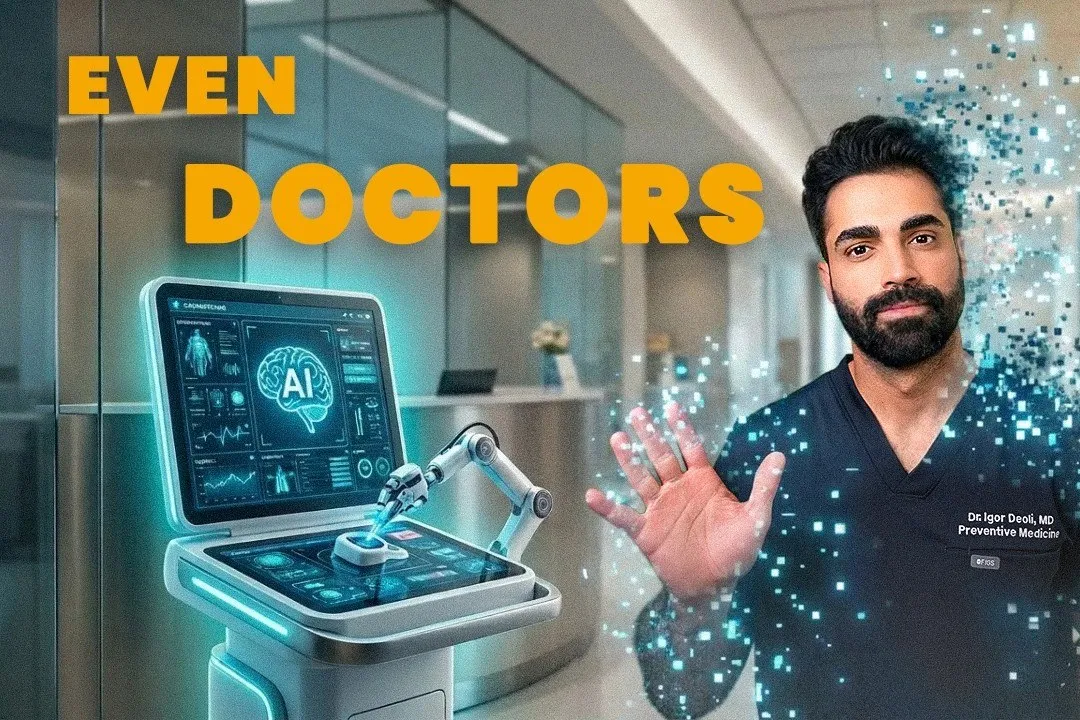
AI will also replace doctors
Your Next Doctor Won’t Be Human
This is my first long-form video in three years — and I did say it was coming in Issue #6, but then almost talked myself out of. I consider myself very up to date with the latest technologies and have been following their advancements closely for as long as I can remember — for reference, I built my first desktop PC when I was 10 or 11 years old, and those were very different times and there was a lot of technical research involved. So this is my honest, un-hyped take on how AI actually changes medicine.
Short and to the point
The quick ones I posted since we last talked — about a minute each, no fluff:
- My favorite heart-health test as a doctor — The coronary calcium score — a CT scan that finds calcified plaque already in your arteries, not just risk factors. I recommend watching this one.
- You can control your genes — What you should know about epigenetics — and why your lifestyle habits can change how your genes are expressed.
- Understand sunscreens and SPFs — Understand how to tell a good sunscreen from a bad one, and what SPF actually means. What really matters. · Read the post ›
- Gym 101: what you should know — The training basics you should know as a beginner lifter.
- A quick gym tip — How to easily attach and detach cable attachments.
- 4 health beliefs that are wrong — A few things “everybody knows” that the evidence doesn’t support.
- Finally understand your cholesterol test & Vitamin D really does a lot — Two of my most-watched shorts from the spring.
Worth your time — on the blog
I published All About Cholesterol — Part 2: How cholesterol actually moves through the blood. Part 1 covered what cholesterol is and why the number on your report can mislead you; Part 2 follows the lipoproteins themselves. For those who want to delve even deeper.
I also put out Coffee, Caffeine, and Your Heart. Short version: moderate coffee (3–4 cups a day) tracks with better cardiovascular outcomes, but coffee and caffeine aren’t the same exposure.
My open diary
My wife and I are finally settling into a good routine with the kids. With both of them in daycare now, it’s helped tremendously — I’ve been able to move projects like this one forward again.
I love doing all of this — the videos, the posts, the newsletter — and I know it helps people, so I’ll keep doing as much of it as I can. Short-form, long-form, blog posts, this newsletter. And of course, it’s all connected, and it’s all coming together.
I really believe I’m building something special here — like a preventive medicine portfolio that I’m proud of. I’m grateful you’re part of it. We press on.
I’m building Oriva Health — a practice focused on preventive medicine for people interested in longevity, physical and mental performance, and brain/cardio metabolic health. If that’s the kind of care you’ve been looking for, you can join the waitlist in the following link to know more.
Know someone who’d appreciate this?
Forward this to one person who’d want a physician’s honest take — no ads, no algorithms, no supplements I wouldn’t take myself. If it was forwarded to you, subscribe below.
P.S. — If you read this far after my long silence: thank you. It would be great if you could forward this to someone who’d get something out of it. That’s how this grows. And reply to tell me what you want more of: lipids, AI, training, or anything else. I read every message myself.
Read next