All You Should Know About Sunscreens
SPF 30 blocks about 97% of UVB and SPF 60 about 98%. But the number on the bottle assumes a dose almost nobody applies. The math behind SPF, and what actually determines your protection.

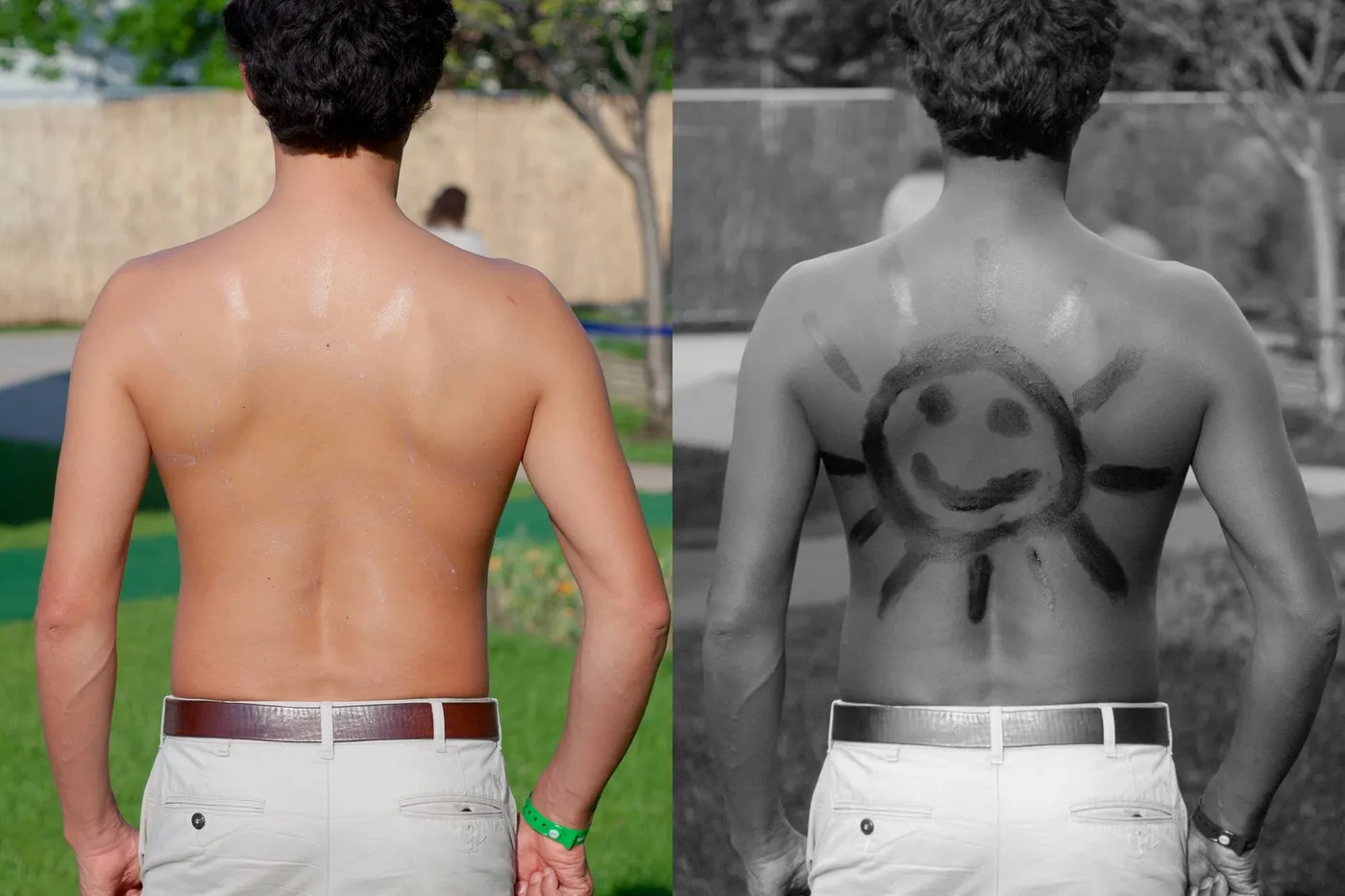
A sunscreen with an SPF of 30 filters about 97% of UVB radiation in laboratory testing.
But what do those numbers actually mean, and why does SPF 60 or higher exist?
First of all, 97% sounds like a big number, and it is. Second, SPF 60 is more protective than SPF 30. But it does not block twice the percentage of UVB, and that gap between what the number looks like and what it does is the first confusion on a sunscreen label.
Because SPF is only one of the things that determines whether your sunscreen works. The rest comes down to what else the label says, how much you apply, and whether you reapply.
Let’s go through all of it.
SPF is mostly a UVB number
SPF stands for sun protection factor.
In FDA testing, it describes protection against sunburn — which is driven mainly by ultraviolet B (UVB) radiation. UVB contributes to sunburn and to skin cancer.
The number comes from a ratio: the UV energy needed to cause redness on protected skin, compared with unprotected skin, under controlled laboratory conditions.
Which means SPF is not a clock.
SPF 30 does not mean everyone can stay in the sun exactly 30 times longer. The sun’s intensity, the time of day, your skin type, sweating, toweling off, and how much product you actually applied all change the real exposure.
Why 30 and 60 look almost identical
Run the numbers:
- SPF 30 filters about 97% of UVB.
- SPF 60 filters about 98% of UVB.
One percentage point. That is why SPF 60 is not “double the protection” in ordinary language — even though it is genuinely the more protective product.
That percentage is not a separate fact you have to memorize, by the way. It falls straight out of the definition.
Now put the two columns side by side, because the same pair of numbers gives you two sentences that sound like opposites.
- Blocked: 96.7% versus 98.3%. A difference of 1.7 percentage points. Sounds like a rounding error.
- Transmitted: 3.3% versus 1.7%. The higher SPF cuts the UVB reaching your skin roughly in half. Sounds like double the protection.
Both are mathematically correct.
Which column you should care about depends on what you are asking. If the question is “am I protected?”, the blocked column answers it — and both products are well past 95%. If the question is “how much UV accumulates over a long day outdoors?”, the transmitted column is the one that matters, because that is the dose actually landing on your skin.
And this is also why each doubling of SPF looks less impressive than the one before it:
- SPF 15 → 30 removes 3.3 percentage points of transmitted UVB.
- SPF 30 → 60 removes 1.7.
- SPF 60 → 100 removes 0.7.
Every step halves what gets through. Every step also has less left to remove. That is the arithmetic of diminishing returns — the numbers on the shelf keep climbing while the practical difference keeps shrinking.
That extra margin can matter if you burn easily, have a history of skin cancer, take photosensitizing medications, or spend prolonged time outdoors.
SPF is not enough — you need broad spectrum
UVA — a different type of radiation from the sun — penetrates deeper into the skin and contributes to photoaging, wrinkles, pigmentation, and also skin cancer. Standard SPF is primarily a measure of UVB protection, so on its own a high SPF number does not tell you how well the product covers UVA.
In the United States, only products that pass the FDA’s UVA test can use the term “broad spectrum.”
So the front of the bottle should say both: “Broad Spectrum” and “SPF 30” or higher.
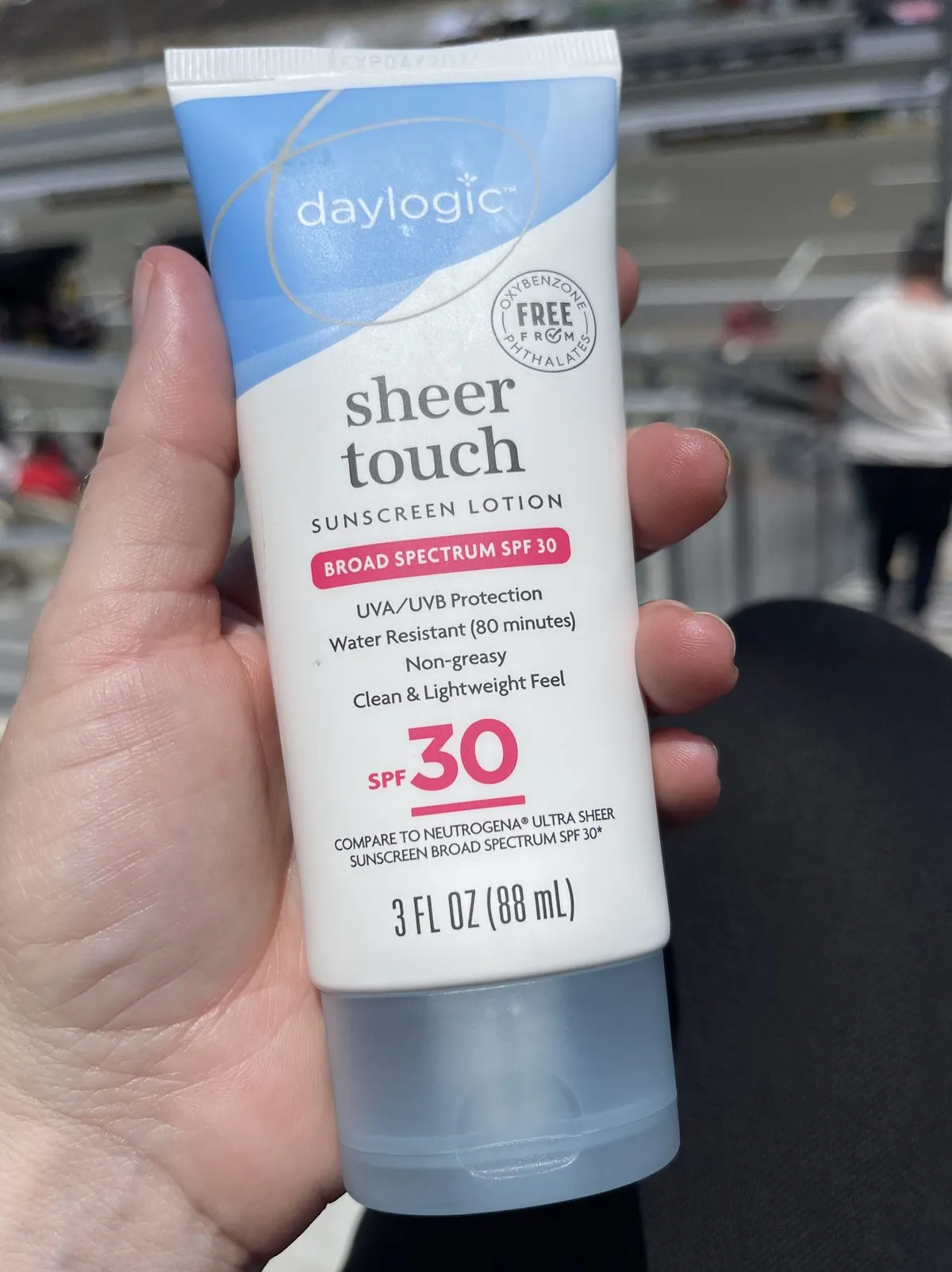
Which means a high SPF without meaningful UVA coverage is an incomplete sunscreen.
The number on the bottle assumes a dose you are probably not applying
SPF is not a property of the sunscreen alone. It is a property of the sunscreen at a specified thickness.
The FDA testing rule is explicit about it: sunscreens are applied at 2 milligrams per square centimeter of skin, and the number printed on the front of the bottle is what that layer earned in the laboratory.
Field studies of what people actually apply put it somewhere between 0.4 and 1.0 mg/cm² — a quarter to a half of the tested dose.
Put the numbers you actually see on a shelf into that model and the result is uncomfortable.
- SPF 30 at half the test dose (1 mg/cm²): √30 ≈ an effective SPF 5.5.
- SPF 30 at a quarter (0.5 mg/cm²): the fourth root of 30 ≈ SPF 2.3.
- SPF 60 at half: √60 ≈ SPF 7.8.
- SPF 60 at a quarter: the fourth root of 60 ≈ SPF 2.8.
Read the last two lines against the first two. At half the tested dose, the whole distance between an SPF 30 and an SPF 60 shrinks to about 5.5 versus 7.8. At a quarter dose, to 2.3 versus 2.8. Both bottles have collapsed toward the bottom of the scale together, and paying for the bigger number did not rescue either one.
Under-application costs you far more protection than any choice you make between two respectable SPF numbers.
However — and this matters, because these are strong numbers and I do not want you quoting them harder than the evidence allows:
How much to apply
Sunscreens earn their SPF rating under standardized application: 2 mg/cm². Most people use less than that in real life, which — as the section above shows — reduces the protection they actually get, and reduces it steeply.
The FDA advises an average-size adult to use about one ounce — roughly a shot glass — to cover the exposed body.
And here is the version of that arithmetic you can check at home. A 200 mL bottle holds fewer than six full-body applications. So if your sunscreen lasted you the whole summer, the bottle already told you the answer.
Apply it generously, and to the places everyone misses:
- Ears
- Neck
- Tops of the feet
- Hands
- Exposed scalp
- Lips, using a product with SPF
Apply about 15 minutes before sun exposure, unless the product directions say otherwise.
Reapplication is part of the dose
Reapply at least every two hours outdoors. Sooner after swimming, heavy sweating, or drying off with a towel.
Put a clock on that. A beach day from 10 a.m. to 4 p.m. is six hours — which is three reapplications after the first one, at noon, at 2, and at 4. Not one. And if you are swimming, more. Most people apply once, in the parking lot, and call it done.
“Water resistant” is a specific, tested claim: the product maintained its labeled protection for either 40 or 80 minutes in standardized water testing.
However, it does not mean waterproof. In fact, the FDA does not allow “waterproof” or “sweatproof” claims at all.
A practical rule: read the number next to “water resistant” and treat it as the maximum interval while swimming or sweating heavily.
Mineral, chemical, or hybrid?
Mineral sunscreens use zinc oxide, titanium dioxide, or both. Other products use filters such as avobenzone, octisalate, octocrylene, or newer ingredients.
You have probably heard that mineral sunscreen reflects light while chemical sunscreen absorbs it. That explanation is too simple. Both types absorb UV; mineral filters also reflect some of it.
So how do you choose?
- Tolerability: mineral products may be easier on sensitive skin.
- Cosmetic feel: other formulations may feel lighter or leave less visible residue.
- Adherence: whichever one you will actually put on, in the right amount, twice a day at the beach.
And on the safety question that comes up constantly: absorption of an ingredient into the blood does not automatically mean it causes harm. The FDA continues to study several filters, and it has not told people to stop using marketed sunscreen. Insufficient data and evidence of harm are two very different things.
When tinted sunscreen really helps
Visible light — not just UV — can worsen melasma and hyperpigmentation, especially in darker skin tones.
Tinted broad-spectrum sunscreens containing iron oxides can add visible-light protection. So for someone actively managing pigment, the tint is not just cosmetic. It also helps.
Sunscreen is just one layer
No sunscreen blocks 100% of UV. Not even the highest number on the shelf, nor the most expensive one.

Clothing, a wide-brim hat, sunglasses, shade, and avoiding the most intense midday sun all reduce the dose before sunscreen has to handle the rest.
- People of every skin color can develop UV damage and skin cancer.
- Infants younger than six months should be protected primarily with shade and clothing — ask a clinician before applying sunscreen.
What I choose for myself
- Broad Spectrum
- SPF 30 or higher
- Water resistant for 40 or 80 minutes, if swimming or sweating
- A texture and finish you will actually apply generously and reapply (I do like the spray, however, for hairy areas).
- Enough of it, twice: apply before you go out, then every two hours
Summary
- SPF is a UVB and sunburn number, not a clock. It is a ratio measured in the laboratory, not a licence to stay out 30 times longer.
- SPF 30 blocks about 97% of UVB and SPF 60 about 98%. The same pair of numbers halves the UV that reaches your skin — which is why the two columns sound like opposites and both are correct.
- A high SPF is not a complete sunscreen. Only “broad spectrum” tells you the product passed the FDA’s UVA test, and UVA is what drives photoaging and pigmentation.
- The number on the bottle assumes 2 mg/cm². People apply a quarter to a half of that, and protection falls steeply — far more than any difference between two respectable SPF numbers.
- About an ounce covers an adult body, and a 200 mL bottle holds fewer than six applications. If a bottle lasted you all summer, you were not applying enough.
- Reapply every two hours, sooner after swimming or towelling. “Water resistant 40 or 80 minutes” is a tested claim; “waterproof” is not allowed at all.
- Mineral or chemical matters less than adherence. Pick the one you will apply generously and reapply.
- Sunscreen is the last layer, not the only one. Clothing, hats, sunglasses and shade reduce the dose before sunscreen has to do anything.
None of this requires you to buy the biggest number on the shelf. It mostly requires you to use what you already bought, in the amount the label was tested at, more than once a day.
Sources and evidence notes
- American Academy of Dermatology. How to Decode a Sunscreen Label. — Current authoritative explanation of SPF, broad spectrum, water resistance, formulation types, and tinted sunscreen.
- U.S. Food and Drug Administration. Tips to Stay Safe in the Sun: From Sunscreen to Sunglasses. — Authoritative guidance on application amount, reapplication, water-resistance labeling, complementary protection, and infant precautions.
- U.S. Food and Drug Administration. Questions and Answers on the OTC Sunscreen Orders. — Regulatory context for sunscreen active ingredients and the distinction between insufficient data and evidence of harm.
- U.S. Code of Federal Regulations. 21 CFR 201.327 — Over-the-Counter Sunscreen Drug Products; Required Labeling Based on Effectiveness Testing. — Regulatory source for the 2 mg/cm² SPF test application rate, the MED-ratio definition of SPF, the 370 nm critical-wavelength criterion for “broad spectrum,” the 40- and 80-minute water-resistance claims, and the two-hour reapplication instruction.
- Faurschou A, Wulf HC. The relation between sun protection factor and amount of sunscreen applied in vivo. Br J Dermatol. 2007;156(4):716-719. — In-vivo source for the exponential relation between amount applied and SPF delivered (r² = 0.903), and for the square-root and fourth-root figures used in the worked examples.
- Petersen B, Wulf HC. Application of sunscreen — theory and reality. Photodermatol Photoimmunol Photomed. 2014;30(2-3):96-101. — Source for real-world application of 0.39 to 1.0 mg/cm² against the 2 mg/cm² test dose.
- Trullàs C, Granger C, Lim HW, Krutmann J, Masson P. Linear and exponential sunscreen behaviours as an explanation for observed discrepancies in sun protection factor testing. Photodermatol Photoimmunol Photomed. 2020;36(5):351-356. — The counterweight cited in the caveat box: real products divide into linear and exponential dose behaviours, and under natural sunlight the two categories did not differ in erythema prevention.
- Isedeh P, Osterwalder U, Lim HW. Teaspoon rule revisited: proper amount of sunscreen application. Photodermatol Photoimmunol Photomed. 2013;29(1):55-56. — Source for translating the 2 mg/cm² test dose into household measures by body region.
- Igor Deoli MD. The SPF You Should Be Using. — Companion short whose explanation of SPF 30, SPF 60, UVB, UVA, broad spectrum, and reapplication was incorporated into this post; the opening paragraphs closely follow its wording.
Educational content only. It does not replace diagnosis or individualized care.
Read next