Seed Oils: What the Evidence Actually Says
Seed oils are blamed for inflammation and heart disease. Here is what randomized trials, major guidelines, and the strongest counterarguments show.

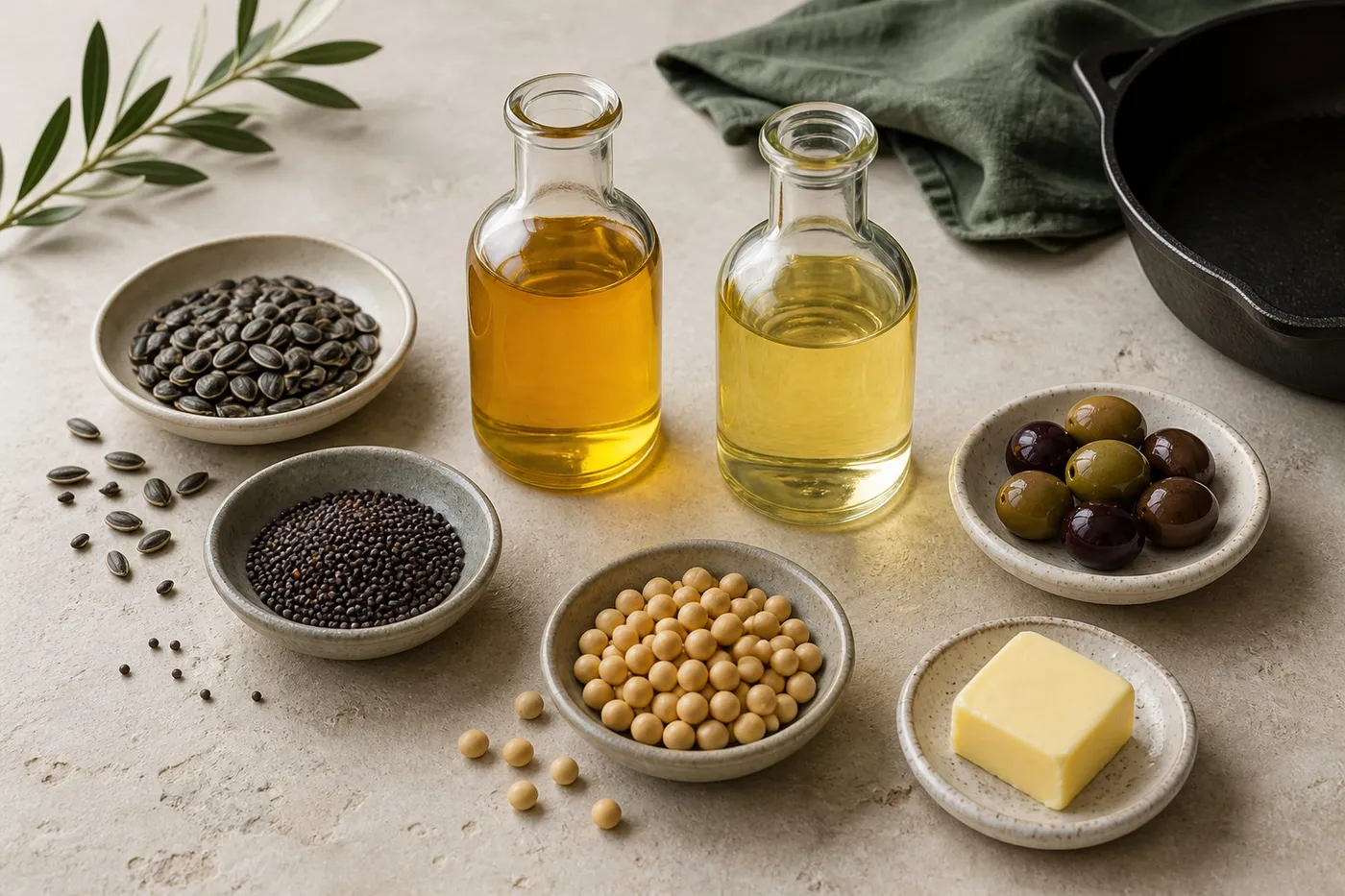
If you have started checking every label for canola, soybean, or sunflower oil, you are not imagining the pressure. Seed oils have been promoted from ordinary ingredients to the alleged cause of inflammation, obesity, diabetes, heart disease, and nearly everything else that has gone wrong with the modern diet.
The reassuring answer would be that every concern is nonsense. The dramatic answer would be that these oils are poison.
The evidence does not support either answer.
“Seed oil” is not one ingredient
The label usually includes canola, soybean, corn, sunflower, safflower, cottonseed, grapeseed, sesame, and rice-bran oils. But they do not have the same fatty-acid profile, and even two bottles with the same plant name can be quite different.
Conventional sunflower oil is rich in linoleic acid, an omega-6 polyunsaturated fat. High-oleic sunflower oil contains much more monounsaturated fat. Canola oil is mostly monounsaturated, with smaller amounts of both linoleic acid and the omega-3 fat alpha-linolenic acid.
This distinction matters because the studies did not all ask the same question. Some trials replaced saturated fat with polyunsaturated fat and followed cardiovascular events.[1][2] Others increased a particular fatty acid—usually linoleic acid—or measured cholesterol, inflammation, or blood and tissue biomarkers.[2][3] So we can learn about the pieces, but we do not have one clean trial of every product people call a seed oil versus none.

What about olive oil? What makes it extra-virgin?
Unlike seed oils, olive oil comes from the fruit of the olive tree rather than from a seed.[5] Even so, I think it is useful to discuss it alongside seed oils. It is one of my favorite cooking oils and one I use every day, so I wanted to give it a section of its own. Here it is.
Virgin describes a family of olive oils obtained only by mechanical or physical means, without refining. Extra-virgin is the strictest edible grade: under the current International Olive Council standard, it must have free acidity no higher than 0.8% and no sensory defects, while virgin olive oil may have up to 2.0% free acidity and limited sensory defects. That “free acidity, expressed as oleic acid” is a quality measure of free fatty acids—not the percentage of the oil that is oleic acid.[5]
Olive oil is mostly oleic acid, a monounsaturated fat; the current standard allows 55–85% of its fatty acids to be oleic acid. But oleic acid is not unique to olive oil. High-oleic sunflower, safflower, and canola oils also contain substantial amounts. The possible cardiovascular advantage remains contextual: the evidence is supportive but not conclusive, and the oil should replace a fat higher in saturated fat without increasing total calories.[5][6]
Virgin oils also retain phenolic compounds, often called polyphenols, including hydroxytyrosol and tyrosol derivatives; refining removes much of this fraction.[7] The amount varies among oils, and “extra-virgin” is not a guaranteed polyphenol dose.[5] The best-substantiated claim specific to these compounds is narrow and dose-specific: protection of LDL particles from oxidative damage when 20 g of oil provides at least 5 mg of hydroxytyrosol and its derivatives.[8] Short trials comparing higher- with lower-phenol oils suggest modest improvements in LDL oxidation and some other biomarkers, but they do not show that isolated polyphenols prevent heart attacks or cancer.[9] The cardiovascular-outcome trial cited above tested a Mediterranean dietary pattern supplemented with extra-virgin olive oil, not isolated polyphenols.[10]
What did the oil replace?
Every cooking fat is energy dense: fat provides about nine calories per gram.[11] If you add oil to an otherwise unchanged diet, you add calories. Whether those calories come from a seed oil, olive oil, butter, ghee, lard, coconut oil, or tallow changes the fatty-acid mix, but it does not make the extra calories disappear.
When one fat replaces another in a similar amount, total calories may remain similar while the type of fat changes.
Replacing saturated fat with polyunsaturated fat reliably lowers LDL cholesterol. In the 2020 Cochrane review of trials lasting at least two years, reducing saturated fat lowered combined cardiovascular events by 17%: risk ratio 0.83, with a 95% confidence interval from 0.70 to 0.98. The same review did not find a clear reduction in all-cause mortality: risk ratio 0.96, with a 95% confidence interval from 0.90 to 1.03. Cardiovascular mortality was also uncertain: risk ratio 0.95, with a 95% confidence interval from 0.80 to 1.12.[1]
The randomized evidence supports a probable, modest reduction in cardiovascular events. It does not prove that seed oils prevent death, and it does not show that every individual oil has the same effect.
A narrower Cochrane review examined trials that specifically increased omega-6 fats. It found lower total cholesterol but uncertain effects on cardiovascular events and heart attacks. It did not show a clear difference in all-cause mortality: risk ratio 1.00, with a 95% confidence interval from 0.88 to 1.12. Only three of the 19 included trials were judged at low risk of bias.[2]
One small trial is useful here. Sixty-one adults with overweight or obesity were asked to eat extra muffins made with either sunflower oil or palm oil for eight weeks. Both groups gained about two kilograms, but liver fat rose by about 50% in the palm-oil group and did not rise in the sunflower-oil group. Liver fat was a secondary outcome, and the study was too short to tell us anything about heart attacks or mortality. Still, it shows that calories and the type of fat can matter at the same time.[12]
In summary, this is neither a “proven lifesaver” nor a “proven poison.” Replacing saturated fat with polyunsaturated fat clearly lowers LDL cholesterol and probably produces a modest reduction in cardiovascular events. Randomized trials have not clearly shown a mortality benefit. My read is that the overall evidence leans toward benefit rather than harm. But for mortality, the numbers are still compatible with little or no effect, so I would not call that part settled.[1][2]
Omega-6 does not automatically mean inflammation
The most popular biological story begins with linoleic acid, which can contribute to pathways that produce arachidonic-acid-derived signaling molecules. Some of those molecules participate in inflammation.
The pathway exists, but it is more complicated than I can cover here. I discuss the biology in more detail in a hypothesis paper I coauthored about a genetic variant that may shift the balance toward arachidonic acid. The common shortcut from that pathway to “seed oils cause inflammation,” however, is much too simple.[13]
Inflammation biology is more complex than a single precursor pathway. More importantly, controlled human studies do not show that increasing linoleic acid within studied dietary ranges consistently raises arachidonic acid in blood or tissue.[14]
Randomized inflammation trials are also reassuring. A 2017 meta-analysis included 30 studies and 1,377 participants. Higher linoleic-acid intake did not significantly change C-reactive protein, IL-6, TNF, or the other inflammatory markers examined. For C-reactive protein, based on 16 studies, the standardized mean difference was 0.09, with a 95% confidence interval from −0.05 to 0.24.[15][16]
These studies were generally small and short. They cannot exclude a problem at extreme intakes or after severe oil degradation. But they directly contradict the claim that ordinary omega-6 intake necessarily creates chronic systemic inflammation.
The old trials people talk about
The strongest skeptical argument does not come from a mouse or a test tube. It comes from two recovered dietary trials conducted in the 1960s and 1970s.
In the Minnesota Coronary Experiment, 9,423 people in institutional settings were randomized to a corn-oil and corn-oil-margarine intervention or a diet higher in saturated fat. The intervention lowered cholesterol, but the recovered data did not show a cardiovascular or mortality benefit.[19]
Among 2,355 participants exposed for at least one year, every 30 mg/dL decline in total cholesterol was associated with higher all-cause mortality: hazard ratio 1.22, with a 95% confidence interval from 1.14 to 1.32. That is concerning. But it was a post-randomization association across both groups, not the randomized estimate that corn oil caused 22% more deaths. The trial also had incomplete recovered data, short or interrupted exposure for many participants, an unusual institutional population, and period-specific foods.[19]
The Sydney Diet Heart Study is the clearer adverse signal. Among 458 men with recent coronary events, the group advised to use safflower oil and safflower-oil margarine had higher all-cause mortality: 17.6% versus 11.8%, hazard ratio 1.62, with a 95% confidence interval from 1.00 to 2.64.[20]
That finding should not be dismissed. It also should not carry more certainty than the trial can support. Sydney was small, included only men with established heart disease, relied on recovered data, and used 1960s margarine whose trans-fat composition remains disputed.
Together, these trials weaken any promise of a large, certain mortality benefit from old high-linoleic interventions. They do not establish that modern, nonhydrogenated seed oils used in ordinary amounts are toxic.
“But didn’t deaths from heart disease rise after we started using seed oils?”
This is one of the most common arguments I hear, and it is all over social media: soybean oil became much more common during the twentieth century, while coronary heart disease deaths also rose during part of that period.
Put the two lines on the same graph and they can look persuasive. But correlation does not mean causation. Two things happening during the same period does not show that one caused the other.
The full timeline makes the problem even clearer. Food-supply estimates—not measured individual intake—show that most of the enormous rise in soybean-oil availability happened from 1946 to 1999.[21] Yet age-adjusted coronary heart disease mortality peaked in 1963 and then fell for decades.[22] For several decades, the two trends actually moved in opposite directions.
That does not prove that soybean oil protects the heart. It simply shows why the earlier correlation cannot prove that soybean oil caused heart disease. Smoking, physical activity, body weight, food processing, diagnosis, blood-pressure and cholesterol treatment, and emergency cardiac care all changed too.
A timeline can raise a question. It cannot answer it. That is why I give more weight to randomized trials, studies that follow people over time, and evidence that the proposed mechanism actually shows up in humans.
What heat does to cooking oil
Heat does change cooking oil, but it does not flip a switch at one exact temperature. Oil does not suddenly become “saturated.” Instead, oxidation and other forms of degradation build gradually. How much occurs depends on the temperature, how long the oil stays hot, exposure to air and moisture, the type of fat, its antioxidants, and whether it is reused. The smoke point is simply when you can see smoke—not the moment when degradation begins.[23]
Most frying happens around 150–190°C (302–374°F). A 2024 review suggests staying below 180°C (356°F) when practical and minimizing reuse. Another review found little change in total trans-fat content below 200°C (392°F), with more trans-fat formation above that temperature and during prolonged heating.[23][24]
Approximate smoke points help put those temperatures in context. Recent laboratory measurements found:
- Fresh extra-virgin olive oils: 195–215°C (383–419°F)
- Refined canola oil: about 228°C (442°F)
- Refined sunflower oil: about 229°C (444°F)
- Refined corn oil: about 232°C (450°F)
These are examples, not promises printed into every bottle. Refining, free-fatty-acid content, antioxidants, age, and reuse can all change the smoke point. A high smoke point also does not mean that an oil resists every form of oxidation better.[25][26]
Here is the simple rule: do not let the oil smoke, and do not keep reusing it. If it has darkened, thickened, started foaming, or smells off, throw it out. Fresh oil used once for sautéing is not the same exposure as commercial frying oil kept hot and reused through many cycles.[23]
Hexane sounds alarming because it is a solvent. It is used to extract many conventional oils, but most of it is removed during processing and regulators limit how much can remain. What we do not have are good long-term human studies comparing these trace residual exposures. The European Food Safety Authority is reassessing technical hexane because some of the modern evidence is incomplete.[27]
If you prefer to avoid solvent extraction, expeller-pressed oil is an easy option. That is a reasonable preference; we simply do not have evidence that it improves clinical outcomes.
Ultra-processed food changes the experiment
This is where the seed-oil argument gets messy. Seed oils are common in chips, doughnuts, packaged sauces, frozen meals, and fast food. But the oil is only one part of the package. Those foods may also be energy dense, quick to eat, and high in refined starch, sugar, sodium, or calories.
In the NIH inpatient trial, 20 adults ate an ultra-processed diet for two weeks and a minimally processed diet for two weeks. On the ultra-processed diet, they ate about 500 more calories per day without being told to and gained about 0.9 kg. During the minimally processed phase, they lost about the same amount.[28]
This was not a seed-oil trial. It tested the entire food pattern. Much of what gets blamed on seed oils may therefore reflect the ultra-processed foods that commonly contain them. Not every food labeled ultra-processed is the same, either; the category is broad and the mechanisms behind its health associations are still being studied.[29]
If cutting seed oils means eating fewer chips, doughnuts, fast-food fries, and packaged snacks, you may improve your diet. That is a worthwhile change. It still does not prove that the seed oil itself was the harmful ingredient.
Guidelines no longer sound exactly the same
The World Health Organization still says unsaturated fats are preferable to saturated fats. It specifically recommends replacing butter, lard, and ghee with PUFA-rich oils such as soybean, canola, corn, safflower, and sunflower oil.[30]
The American Heart Association’s 2026 scientific statement takes the same approach: choose unsaturated-fat sources in place of saturated-fat sources, while paying attention to the whole dietary pattern rather than obsessing over one nutrient.[31]
The 2025–2030 Dietary Guidelines for Americans changed the emphasis.[32] Politics may help explain the shift: the final policy departed from the advisory committee’s scientific report, and public-interest groups raised conflict-of-interest and transparency concerns during the process.[33][34] Official disclosures said the committee complied with federal ethics rules, so the available evidence does not prove why any specific recommendation changed.[35]
The guidelines still recommend keeping saturated fat below 10% of calories and prioritizing oils containing essential fatty acids. But they put olive oil front and center, list butter and beef tallow as other cooking options, and call for more high-quality research about long-term fat choices.[32]
A new official U.S. interpretation matters, but it is not the same thing as a new decisive randomized trial. WHO, AHA, European, Nordic, and UK guidance has not reversed its broader preference for unsaturated fats in place of saturated fats.[30][31][36][17][37]
What I do in my kitchen
In my kitchen, extra-virgin olive oil is the default. I use it for everything—cooking and finishing—because I like the flavor, and Mediterranean dietary patterns that include it have strong cardiovascular evidence.[10] That is my preference, not proof that ordinary amounts of seed oils are harmful. I am also comfortable with ordinary amounts of canola, soybean, sunflower, safflower, or corn oil.
I buy a bottle I know I can finish—not the giant jug. A smaller bottle may cost a little more, but it is worth it to me because I can use it while it is still fresh. I keep it away from heat and light, do not let it smoke, and do not reuse it.
I would not do a seed-oil detox, and I would not replace liquid plant oils with butter, ghee, coconut oil, or tallow. I still use those fats occasionally, but they tend to raise LDL cholesterol when they replace unsaturated oils.[1] I explain the particle biology in Part 2 of my cholesterol series.
My bigger priorities are eating mostly minimally processed foods, getting enough omega-3-rich foods—especially sources of EPA and DHA—and limiting repeatedly fried or calorie-dense ultra-processed foods.
Summary
- “Seed oils” is not one exposure. The oils, fatty-acid profiles, processing methods, doses, and cooking histories differ.
- What the oil replaces matters. Replacing saturated fat with PUFA-rich oil lowers LDL and probably modestly lowers cardiovascular-event risk; pouring extra oil onto an unchanged diet simply adds calories.
- The inflammation claim is overstated. Randomized human trials do not show that ordinary linoleic-acid intake consistently raises systemic inflammatory markers.
- The old trials preserve uncertainty. Minnesota and Sydney are legitimate null or adverse signals, but they do not prove that modern nonhydrogenated oils are toxic.
- A historical correlation is not a causal test. Soybean-oil availability rose, but coronary heart disease death rates later fell even after accounting for population aging; the timeline proves neither harm nor safety.
- Repeated frying is a separate problem. High heat, long duration, and reuse increase chemical degradation; long-term human outcome evidence remains limited.
- Guidelines no longer sound identical. Current U.S. guidance is less explicit about replacing saturated fat, while WHO and AHA continue to favor unsaturated-fat sources.
- My kitchen default is extra-virgin olive oil. Ordinary amounts of fresh seed oils are also reasonable; butter and tallow are not a cardiovascular upgrade.
Nutrition becomes clearer when we stop asking whether one ingredient is “good” or “bad” and ask what it replaces, how much we use, and how it is prepared. Seed oils do not need a halo. They also do not deserve a toxin label the current human evidence cannot support.
Sources and evidence notes
Hooper L, et al. Reduction in saturated fat intake for cardiovascular disease. Cochrane Database Syst Rev. 2020;8:CD011737. — Source for combined cardiovascular events, RR 0.83 (95% CI 0.70–0.98), and the absence of clear all-cause or cardiovascular mortality effects, RR 0.96 (95% CI 0.90–1.03) and RR 0.95 (95% CI 0.80–1.12), respectively.
Hooper L, et al. Omega-6 fats for the primary and secondary prevention of cardiovascular disease. Cochrane Database Syst Rev. 2018;11:CD011094. — Direct omega-6 trial synthesis supporting lower cholesterol, uncertain cardiovascular endpoints, no clear all-cause-mortality difference, and the important risk-of-bias limitation.
Marklund M, et al. Biomarkers of dietary omega-6 fatty acids and incident cardiovascular disease and mortality. Circulation. 2019;139:2422–2436. — Pooled prospective biomarker evidence against a large cardiovascular-harm signal; observational and not proof of benefit from a specific oil.
Casperson SL, Conrad Z, Raatz SK, et al. Impact of beef consumption on saturated fat intake in the United States adult population: Insights from modeling the influences of bovine genetics and nutrition. Meat Sci. 2020;169:108225. — Uses USDA composition data to show that beef fat is a mixture of saturated, monounsaturated, and polyunsaturated fatty acids; the exact proportions vary with the animal and production system.
International Olive Council. Trade Standard Applying to Olive Oils and Olive Pomace Oils. COI/T.15/NC No. 3/Rev. 22. June 2026. — Defines virgin oils as mechanically or physically obtained without refining; supports the extra-virgin and virgin free-acidity and sensory thresholds, the distinction between free acidity and total oleic-acid content, and the 55–85% oleic-acid composition range. The standard does not guarantee a particular phenolic concentration for the extra-virgin grade.
U.S. Food and Drug Administration. FDA Completes Review of Qualified Health Claim Petition for Oleic Acid and the Risk of Coronary Heart Disease. November 19, 2018. — Identifies olive, high-oleic sunflower, high-oleic safflower, and high-oleic canola oils as oleic-acid-rich sources. The FDA calls the coronary evidence supportive but not conclusive and conditions the possible benefit on replacing fats higher in saturated fat without increasing calories.
Lucci P, Bertoz V, Pacetti D, Moret S, Conte L. Effect of the Refining Process on Total Hydroxytyrosol, Tyrosol, and Tocopherol Contents of Olive Oil. Foods. 2020;9:292. — Processing study showing that hydroxytyrosol and tyrosol were removed early during refining of the tested lampante olive oils. It supports the compositional distinction between virgin and refined oils, not a clinical-outcome claim.
EFSA Panel on Dietetic Products, Nutrition and Allergies. Scientific Opinion on olive polyphenols and protection of LDL particles from oxidative damage. EFSA J. 2011;9(4):2033. — Supports the narrow claim that olive-oil polyphenols protect LDL particles from oxidative damage when 20 g of oil provides at least 5 mg of hydroxytyrosol and its derivatives. It does not establish that isolated polyphenols prevent cardiovascular events, cancer, or other clinical diseases.
Derakhshandeh-Rishehri SM, et al. Effect of olive oil phenols on oxidative stress biomarkers: a systematic review and dose-response meta-analysis of randomized clinical trials. Food Sci Nutr. 2023;11:2393–2402. — Short randomized-trial synthesis finding small reductions in oxidized LDL and malondialdehyde with higher-phenol oils, with heterogeneous studies and no evidence about cardiovascular events or cancer outcomes.
Estruch R, et al. Primary Prevention of Cardiovascular Disease with a Mediterranean Diet Supplemented with Extra-Virgin Olive Oil or Nuts. N Engl J Med. 2018;378:e34. — Supports extra-virgin olive oil within a Mediterranean dietary pattern; it did not isolate the oil from the rest of that pattern.
U.S. Food and Drug Administration. Food Labeling: Revision of the Nutrition and Supplement Facts Labels—Small Entity Compliance Guide. January 2020. — Regulatory source for the general caloric factor of nine calories per gram of total fat; foods such as butter also contain water and other components, so one gram of the food is not necessarily one gram of fat.
Rosqvist F, Kullberg J, Ståhlman M, et al. Overeating Saturated Fat Promotes Fatty Liver and Ceramides Compared With Polyunsaturated Fat: A Randomized Trial. J Clin Endocrinol Metab. 2019;104:6207–6219. — In 61 adults with overweight or obesity deliberately overfed for eight weeks, sunflower-oil muffins produced less liver-fat accumulation than palm-oil muffins despite similar weight gain. Liver and ectopic-fat measures were secondary or exploratory outcomes; the trial was short and measured no clinical events.
Oliveira I, Gilpin-Falk AE, Block RC. Hypothesis: the rs66698963 insertion–deletion alters the AA/EPA ratio and cardiovascular disease risk. Lipids Health Dis. 2026;25:117. — A hypothesis paper connecting FADS genetics, the AA/EPA ratio, inflammation, and cardiovascular risk; it proposes a testable mechanism and does not report new clinical outcome data.
Rett BS, Whelan J. Increasing dietary linoleic acid does not increase tissue arachidonic acid content in adults consuming Western-type diets: a systematic review. Nutr Metab. 2011;8:36. — Supports the narrower mechanistic claim that higher linoleic-acid intake did not meaningfully raise plasma, serum, or erythrocyte arachidonic acid in the included adult studies.
Su H, et al. Dietary linoleic acid intake and blood inflammatory markers: a systematic review and meta-analysis of randomized controlled trials. Food Funct. 2017;8:3091–3103. — Source for the 30-trial inflammation analysis and the 16-study CRP estimate, SMD 0.09 (95% CI −0.05 to 0.24).
Johnson GH, Fritsche K. Effect of dietary linoleic acid on markers of inflammation in healthy persons: a systematic review of randomized controlled trials. J Acad Nutr Diet. 2012;112:1029–1041. — Independent randomized-trial review supporting the conclusion that ordinary linoleic-acid increases do not consistently raise inflammatory markers.
Nordic Council of Ministers. Nordic Nutrition Recommendations 2023: Fat and fatty acids. — States that evidence is insufficient to set an omega-6:omega-3 ratio and gives separate intake targets instead; also supports replacing saturated fat with unsaturated fat.
Food and Agriculture Organization of the United Nations. Fats and Fatty Acids in Human Nutrition: Report of an Expert Consultation. FAO Food Nutr Pap. 2010;91. — The joint FAO/WHO expert consultation concluded that a specific omega-6:omega-3 ratio is not useful when both fats fall within recommended intake ranges.
Ramsden CE, et al. Re-evaluation of the traditional diet-heart hypothesis: analysis of recovered data from Minnesota Coronary Experiment. BMJ. 2016;353:i1246. — Source for the Minnesota trial and the post-randomization cholesterol–mortality association; supports the limitations stated in the text.
Ramsden CE, et al. Use of dietary linoleic acid for secondary prevention of coronary heart disease and death: evaluation of recovered data from the Sydney Diet Heart Study. BMJ. 2013;346:e8707. — Source for the Sydney all-cause mortality signal, HR 1.62 (95% CI 1.00–2.64), and its historical secondary-prevention context.
Blasbalg TL, Hibbeln JR, Ramsden CE, Majchrzak SF, Rawlings RR. Changes in consumption of omega-3 and omega-6 fatty acids in the United States during the 20th century. Am J Clin Nutr. 2011;93:950–962. — Analysis of USDA food-supply data documenting the large rise in estimated soybean-oil and linoleic-acid availability from 1909 to 1999, with most of the increase after 1946. These are modeled per-capita availability estimates, not measured individual intake or health outcomes.
Centers for Disease Control and Prevention. Decline in deaths from heart disease and stroke—United States, 1900–1999. MMWR Morb Mortal Wkly Rep. 1999;48:649–656. — Historical vital-statistics summary reporting that age-adjusted coronary heart disease mortality peaked in 1963 and then declined; it also describes concurrent changes in smoking, blood pressure, cholesterol, diet, and medical care.
Abrante-Pascual S, Nieva-Echevarría B, Goicoechea-Oses E. Vegetable Oils and Their Use for Frying: A Review of Their Compositional Differences and Degradation. Foods. 2024;13:4186. — Supports the 150–190°C (302–374°F) frying range, staying below 180°C (356°F) when practical, minimizing reuse, and the broader explanation of oil degradation.
Bhat S, Maganja D, Huang L, Wu JHY, Marklund M. Influence of Heating during Cooking on Trans Fatty Acid Content of Edible Oils: A Systematic Review and Meta-Analysis. Nutrients. 2022;14:1489. — Found minimal effects on total trans-fat content below 200°C (392°F), with greater formation above 200°C and during prolonged heating.
Díez-Betriu A, et al. Deciphering the Complexity of Smoke Point in Virgin Olive Oils to Develop Simple Predictive Models. Foods. 2025;14:4099. — Measured smoke points of 195–215°C (383–419°F) across 19 fresh extra-virgin olive oils and found that free-fatty-acid content was the strongest determinant.
Fallah F, Arabshahi-Delouee S. Oxidative Stability and Discarding Time of Two Frying Oil Blends During Deep Frying of Potatoes. J Food Process Preserv. 2026;2026:3936842. — Source for the illustrative smoke points of recently produced refined canola, sunflower, and corn oils; the study tested one production batch of each.
European Food Safety Authority. Extraction solvents. Updated December 17, 2025. — Source for the regulatory context and EFSA’s active reassessment of technical hexane because of contemporary evidence gaps.
Hall KD, et al. Ultra-Processed Diets Cause Excess Calorie Intake and Weight Gain: An Inpatient Randomized Controlled Trial. Cell Metab. 2019;30:67–77.e3. — Source for the roughly 500 kcal/day intake difference and short-term weight change; the intervention tested a full dietary pattern, not seed oil.
Nordic Council of Ministers. Nordic Nutrition Recommendations 2023: Ultra-processed foods. — Describes ultra-processed foods as a heterogeneous category, summarizes their observational health associations, and notes that mechanisms and the value of the classification remain uncertain.
World Health Organization. Healthy diet. Updated January 26, 2026. — Current practical guidance for preferring unsaturated fats and replacing butter, lard, and ghee with PUFA-rich oils; also supports limiting fried and highly processed foods.
Lichtenstein AH, et al. 2026 Dietary Guidance to Improve Cardiovascular Health: A Scientific Statement From the American Heart Association. Circulation. 2026. — Current AHA support for replacing saturated-fat sources with unsaturated-fat sources within a minimally processed dietary pattern.
U.S. Department of Health and Human Services and U.S. Department of Agriculture. Dietary Guidelines for Americans, 2025–2030. — Source for the current U.S. saturated-fat limit, olive-oil emphasis, butter/tallow language, and call for additional long-term fat research.
Stanford Nutrition Studies Research Group. What the 2025–2030 Dietary Guidelines Get Right—and Where They Fall Short. Stanford Medicine. 2026. — Documents important departures from the advisory committee’s scientific report and argues that political and industry alignment influenced the final policy; this is expert commentary, not proof of motive.
Center for Science in the Public Interest. Groups urge disclosure of potential financial conflicts among members of the dietary guidelines advisory committee. Updated January 30, 2023. — Records transparency and conflict-of-interest concerns raised by fifteen public-health and consumer organizations during formation of the 2025 advisory committee.
U.S. Department of Health and Human Services and U.S. Department of Agriculture. 2025 Dietary Guidelines Advisory Committee disclosures. — The agencies’ disclosure document states that committee members complied with applicable federal conflict-of-interest rules.
Visseren FLJ, et al. 2021 ESC Guidelines on cardiovascular disease prevention in clinical practice. Eur Heart J. 2021;42:3227–3337. — European guidance supporting replacement of saturated fat with unsaturated fat or fiber-rich carbohydrate.
National Institute for Health and Care Excellence. Cardiovascular disease: risk assessment and reduction, including lipid modification. NG238. — Practical UK guidance to replace saturated fat with mono- and polyunsaturated fats, including rapeseed and olive oils.
Educational content only. It does not replace diagnosis or individualized care.
Read next